
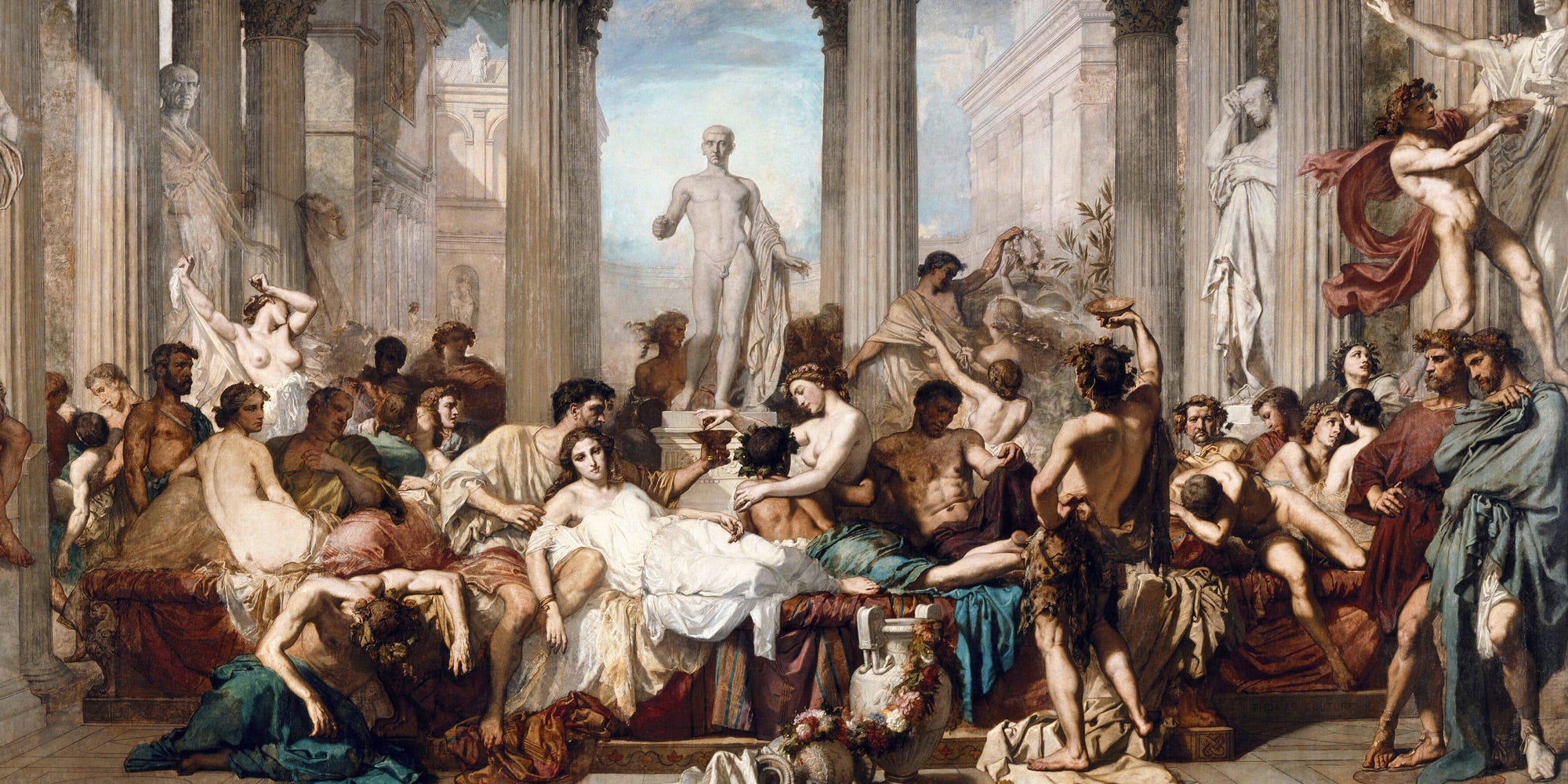
Even Epicurus died—that man
Who surpassed in genius the whole human race,
As the risen sun quenches the stars.
So how can you hesitate and be resentful of dying?
Your life is already so close to death:
Most of your time is used up in sleep,
Even awake, you snore and see dreams,
Your mind is always anxious from fears without substance
And even as countless worries surround you,
You can’t figure out what is truly the matter,
Wandering and drifting in a sea of delusions.

So it is with men, always weighed down
By some great mass on their minds, by a wearying burden.
But if they understood the causes of their misery,
Knew the source of that mountain of sadness on their hearts,
They would not live as they do. We see so many
Who don’t know what they want and who constantly seek
New surroundings, as if that could shake off their burden.
Often a man will step out from his great mansion,
Weary of his home, and then promptly return—
Being abroad does not make him feel better.
Off he flies to his villa, driving hard his Gallic horses,
Rushing as if the house were on fire.
He touches the threshold and in a moment is yawning,
Soon buried in sleep, in search of oblivion,
Or else turns around, back to the city once more.
Thus every such person attempts to flee himself—
An impossible task. To his own self each must cling,
Against his own will, and so comes to self-hatred,
A sick man who can’t understand his own sickness.
If such men knew the cause, they would abandon all else
And study the nature of things. For the matter at stake
Is not our condition for an hour, but for all of eternity,
The endless time that waits after death for all mortals.

And so what is this great and evil craving for life,
That compels us so strongly to agitation, doubt and danger?
There is no mistaking that life must end for all mortals.
We cannot avoid death; we must go to meet it.
We keep moving about, but are always in the same places—
A life that is longer does not forge us new pleasures:
While we lack what we desire, all else seems pointless.
But once we attain it, we desire something else,
Our thirst undiminished, our mouths always wide open.

It is uncertain what fortune the future will bring,
What chance has in store, and what end awaits us.
But prolonging life can never take one whit away
From the time we are dead. We can never reduce that;
There is nothing that will make the eternal less long.
And so you may close out all the years that you wish,
But death will still await, no less eternal.
And the man whose life sets with this evening’s sun
Will no longer be, for no less a time
Than he who died in months past or long years ago.
Commentary
In recent weeks, I’ve introduced both Lucretius and the Epicurean perspective on death. Today’s excerpt continues both tracks, with a key passage from On the Nature of Things rendering the raw doctrines into vivid, piercing poetry. As expressed in the previous essay, one of the key elements of the Epicurean response to the fear of death is a firm denial that merely accumulating additional experiences—no matter how pleasurable—should be considered an amplification of our happiness or an intrinsically important pursuit. Written in the minimal, blunt statements of the Principal Doctrines, this can seem abstract and unpersuasive, especially given the distance of such a claim from the way most people seem to live. Lucretius is the remedy: he makes the doctrines come alive.
He expresses the central principle with unmistakable directness:
A life that is longer does not forge us new pleasures.
But Lucretius also elaborates with a vivid portrait of a man who tries to fill his life with more such pleasurable experiences: a city mansion, a country villa, fine horses, leisure—none of these resolve the problem. Sometimes the condition of such people will look like explicit misery, sometimes it appears like boredom, often it is something like Thoreau’s “lives of quiet desperation.” But the real problem such people face, according to Lucretius, is that they don’t know what they want.
Travel is a potent and classic metaphor for this. It is impossible to flee ourselves. The idea comes up repeatedly in Horace. See Ode 2.16, or Epistle 1.11:
Those who rush across the sea change their sky, not their heart.
caelum, non animum mutant, qui trans mare currunt
It was famously expressed in Emerson’s “Self-Reliance”:
Travelling is a fool’s paradise. Our first journeys discover to us the indifference of places. At home I dream that at Naples, at Rome, I can be intoxicated with beauty, and lose my sadness. I pack my trunk, embrace my friends, embark on the sea, and at last wake up in Naples, and there beside me is the stern fact, the sad self, unrelenting, identical, that I fled from. I seek the Vatican, and the palaces. I affect to be intoxicated with sights and suggestions, but I am not intoxicated. My giant goes with me wherever I go.
But the rage of travelling is a symptom of a deeper unsoundness affecting the whole intellectual action. The intellect is vagabond, and our system of education fosters restlessness.
Lucretius would agree that the desire for travel is not the sum of the mistake. That desire is merely the symptom of a deeper insatiability and confusion. The remedy is to study “the nature of things”—the subject of his poem. Such knowledge removes the anxiety and empty fears that weigh on our mind: people will be more at peace once they fully understand that life will end and that they have nothing to fear after death. But Epicurean knowledge is not limited to these big metaphysical questions, but also encompasses the understanding of human desires—what is natural, what is necessary, and what is neither. There is a theoretical basis for the Epicurean classification of the desires, but also an empirical one: watching people like the one depicted here makes it clear that travel and other novelty does not bring peace of mind.
Original Text
3.1042–94
ipse Epicurus obit decurso lumine vitae,
qui genus humanum ingenio superavit et omnis
restinxit stellas exortus ut aetherius sol.
tu vero dubitabis et indignabere obire?
mortua cui vita est prope iam vivo atque videnti,
qui somno partem maiorem conteris aevi,
et viligans stertis nec somnia cernere cessas
sollicitamque geris cassa formidine mentem
nec reperire potes tibi quid sit saepe mali, cum
ebrius urgeris multis miser undique curis
atque animi incerto fluitans errore vagaris.

Si possent homines, proinde ac sentire videntur
pondus inesse animo, quod se gravitate fatiget,
e quibus id fiat causis quoque noscere et unde
tanta mali tam quam moles in pectore constet,
haut ita vitam agerent, ut nunc plerumque videmus
quid sibi quisque velit nescire et quaerere semper
commutare locum, quasi onus deponere possit.
exit saepe foras magnis ex aedibus ille,
esse domi quem pertaesumst, subitoque revertit,
quippe foris nihilo melius qui sentiat esse.
currit agens mannos ad villam praecipitanter
auxilium tectis quasi ferre ardentibus instans;
oscitat extemplo, tetigit cum limina villae,
aut abit in somnum gravis atque oblivia quaerit,
aut etiam properans urbem petit atque revisit.
hoc se quisque modo fugit, at quem scilicet, ut fit,
effugere haut potis est: ingratis haeret et odit
propterea, morbi quia causam non tenet aeger;
quam bene si videat, iam rebus quisque relictis
naturam primum studeat cognoscere rerum,
temporis aeterni quoniam, non unius horae,
ambigitur status, in quo sit mortalibus omnis
aetas, post mortem quae restat cumque manenda.

Denique tanto opere in dubiis trepidare periclis
quae mala nos subigit vitai tanta cupido?
certe quidem finis vitae mortalibus adstat
nec devitari letum pote, quin obeamus.
praeterea versamur ibidem atque insumus usque
nec nova vivendo procuditur ulla voluptas;
sed dum abest quod avemus, id exsuperare videtur
cetera; post aliud, cum contigit illud, avemus
et sitis aequa tenet vitai semper hiantis.

posteraque in dubiost fortunam quam vehat aetas,
quidve ferat nobis casus quive exitus instet.
nec prorsum vitam ducendo demimus hilum
tempore de mortis nec delibare valemus,
quo minus esse diu possimus forte perempti.
proinde licet quod vis vivendo condere saecla,
mors aeterna tamen nihilo minus illa manebit,
nec minus ille diu iam non erit, ex hodierno
lumine qui finem vitai fecit, et ille,
mensibus atque annis qui multis occidit ante.
There is something cleansing about a classic tragedy. It takes human pride, strips away its excuses, and leaves the soul standing under a cold sky, suddenly aware that truth has very few decorations.