
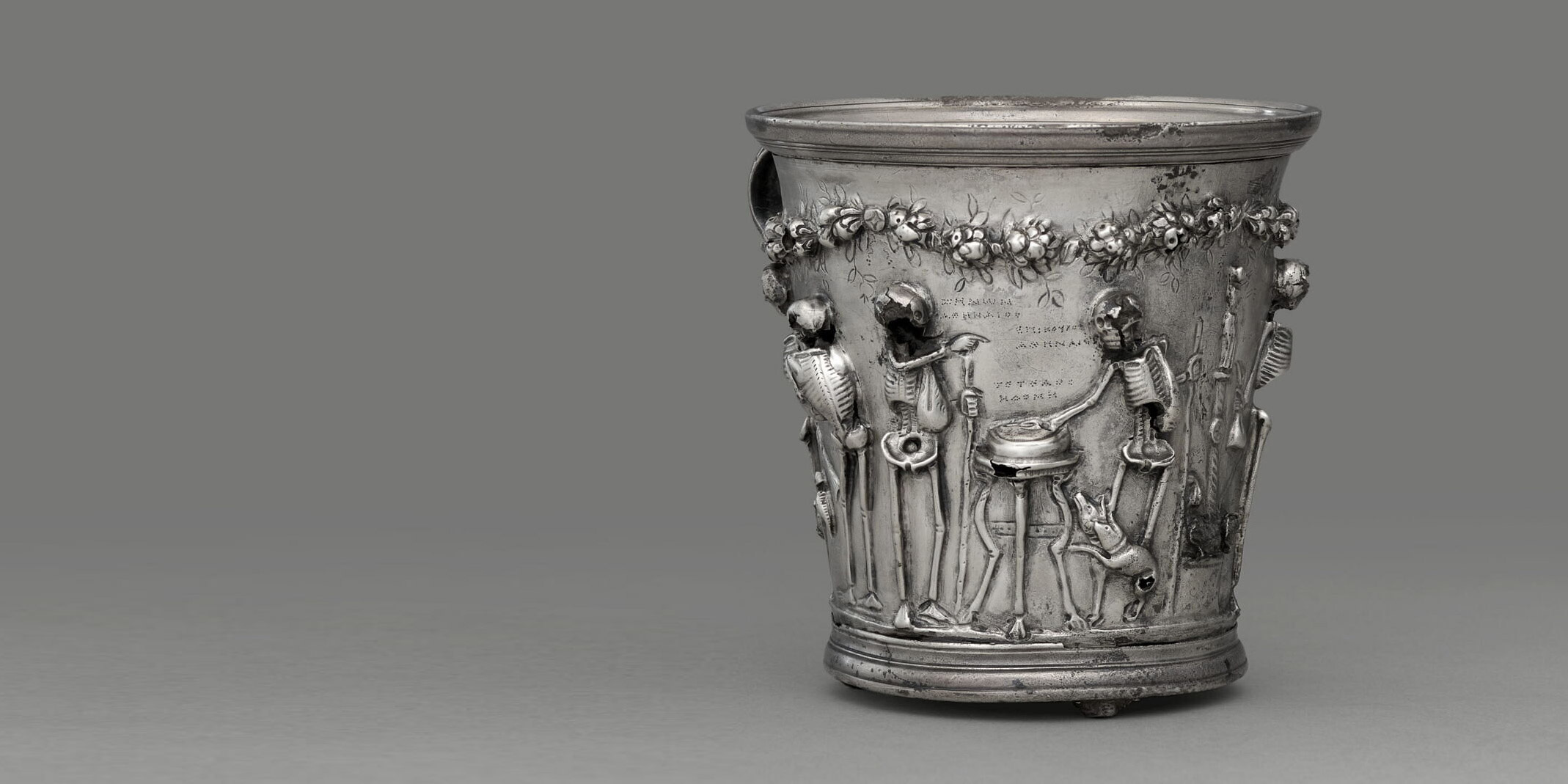
Next, accustom yourself to living with this belief: death is nothing to us, for everything good and bad consists in sensation, and death brings an end to sensation. Knowing this, a correct understanding that death is nothing to us enables us to enjoy the mortal nature of life, not by providing us with unlimited time, but by taking away the desire for immortality.
There is indeed nothing terrifying in life for one who has truly understood that there is nothing terrifying in not living. Only a foolish man says that he fears death not because it will cause him pain when it is actually present, but because it causes him pain now when it is still in the future—something that gives us no trouble when it is actually present can cause only empty and groundless pain when it is merely expected. Therefore, death, the most terrifying of evils, is nothing to us, since whenever we exist, death cannot be present, and whenever death is present, then we no longer exist. I say to you again: death does not exist for either the living or the dead, for there is no death among the living, while the dead themselves no longer exist.
The many, however, sometimes shun death as the greatest of evils, while at other times they long for it as a relief from the evils of life. But the wise man neither refuses to live nor fears not living, for he does not find living to be distasteful, nor not living to be an evil. Just as he would choose not the largest portion of food, but the most pleasurable, so he also seeks to enjoy not the longest, but the most pleasant span of life.
Those who counsel the young to live well and the old to die well are fools, not only for failing to appreciate life’s warm welcome, but because the practices needed to live well and to die well are one and the same. Even worse is the man who claims that it is good not to have been born, or “Once born, to pass as quickly as possible through the gates of Hades.”
If he is persuaded of this, why does he go on living? It is easy to bid farewell to life if he has truly come to this conclusion. If he is only joking, however, and does not speak in earnest, then all those who do not believe his claim will see him as the empty fool he is.
Overall, we must remember that the future is neither entirely up to us, nor entirely beyond our control. Nothing is certain, and nothing is hopeless.
Commentary
Read the full translation series on the Letter to Menoeceus here.
This week, we’re moving on to the second entry in our five-part series on Epicurus’ Letter to Menoeceus, the short summary of his ethical teachings included by Diogenes Laertius in his Lives of the Eminent Philosophers. Last week, we covered the intro and the nature of the gods; this week we’re talkin’ about death. This is a subject that continues to cause many people a good deal of fear, dread, and angst, but Epicurus is fortunately able to clear all that up in a matter of 300 or so Greek words. Let’s jump in:
Next, accustom yourself to living with this belief: death is nothing to us, for everything good and bad consists in sensation, and death brings an end to sensation. Knowing this, a correct understanding that death is nothing to us enables us to enjoy the mortal nature of life, not by providing us with unlimited time, but by taking away the desire for immortality.
“Death is nothing to us” is one of Epicurus’ most famous dictums. Here he presents a simple syllogistic defense of this position:
Things are only bad (or good) if they can be perceived.
Death brings an end to perception.
Therefore, death is not bad.
Personally, I accept both premises. Not everyone does, of course. Some people think that things are objectively good or bad, that perception has nothing to do with it, and that death self-evidently belongs in the “bad” category. Some people are convinced there is a life after death. I don’t see much usefulness in the first claim or evidence for the second, but if you adhere firmly to such a position, then Epicurus’ reasoning will obviously not appeal to you.
A somewhat better objection would be to dispute the precision of those two premises. Death brings an end to our own perception, but other people do perceive our death, and that may cause them pain. This is true and Epicurus does not dispute it: his argument here is about our fear of our own death, but he would not deny that it is painful to lose a loved one, for instance. Similarly, one might object that while death will not cause someone pain once it has arrived, the anticipation of non-existence does cause us pain here and now. Epicurus lets us know what he thinks of this argument in the very next paragraph:
There is indeed nothing terrifying in life for one who has truly understood that there is nothing terrifying in not living. Only a foolish man says that he fears death not because it will cause him pain when it is actually present, but because it causes him pain now when it is still in the future—something that gives us no trouble when it is actually present can cause only empty and groundless pain when it is merely expected. Therefore, death, the most terrifying of evils, is nothing to us, since whenever we exist, death cannot be present, and whenever death is present, then we no longer exist. I say to you again: death does not exist for either the living or the dead, for there is no death among the living, while the dead themselves no longer exist.
This is a somewhat nuanced distinction, and one which I think Epicurus gets more right than his detractors. Yes, the pain of anticipating death is clearly real—people do feel it. That is empirically undeniable. However, it is an “empty and groundless” pain (κενῶς λυπεῖ; literally, it “gives pain emptily” or “gives pain to no purpose”). The fact that someone can cause themselves mental pain is no evidence of that pain’s objective truth or inevitability. People cause themselves pain through unproductive thought patterns all the time.
This is the underlying premise of modern Cognitive Behavioral Therapy. If someone has a phobia of crossing bridges, we don’t simply accept that bridges are terrible—we encourage him to develop a more accurate and helpful understanding of the world, perhaps by showing him that no physical pain actually results from crossing a bridge. It is harder to demonstrate the painlessness of death, so people have often been tempted to give excessive credence to scary stories, but I think the preponderance of evidence strongly points towards death involving the dissolution of our consciousness. The fear of death is simply an irrational phobia that is relatively more widespread due to the historical prevalence of fear-inducing stories about the afterlife.
Today, those old stories are often not believed literally, but I think they have a vague afterlife in the background of our thoughts. For instance, I’ve heard people compare life to a party that they don’t wish to leave—they say that the thought of it all ending for them causes them pain, even though they don’t expect to be in Heaven, Hell, or anywhere else. But I think the party analogy falls apart when we truly embrace an expectation of nonexistence. In truth, we won’t be sitting home alone while the party continues. We won’t be going to work the next day and wishing our life were more pleasurable. We simply won’t exist, so it is no more reasonable to lament missing next year’s party than it would be to lament missing the party of life that took place a year before we were born. I agree with Epicurus: that would be a foolish and empty way of causing ourselves pain.
The many, however, sometimes shun death as the greatest of evils, while at other times they long for it as a relief from the evils of life. But the wise man neither refuses to live nor fears not living, for he does not find living to be distasteful, nor not living to be an evil. Just as he would choose not the largest portion of food, but the most pleasurable, so he also seeks to enjoy not the longest, but the most pleasant span of life.
Here, Epicurus adds additional precision as to how thinks the wise man will live once he has realized that death is not to be feared. It does not mean he will actively pursue death. As a general rule, Epicurus does not endorse suicide (the Stoics are more enthusiastic about it), though I think there is room for debate as to whether he would disapprove in cases of intensely painful terminal illness. It does mean that he will place a relatively low premium on extending his life. If one can secure additional days or years of life, but at the cost of diminished pleasure, it may well not be worth it. Betrayal of all your friends? Ridiculously expensive experimental longevity drugs? Becoming a house-bound recluse to avoid snakes, cars, and lightning? Probably not the choice of the Epicurean sage. Someone who lives a happy 80-year life is not less happy than someone who lives a happy 81-year life.
Those who counsel the young to live well and the old to die well are fools, not only for failing to appreciate life’s warm welcome, but because the practices needed to live well and to die well are one and the same. Even worse is the man who claims that it is good not to have been born, or “Once born, to pass as quickly as possible through the gates of Hades.”
If he is persuaded of this, why does he go on living? It is easy to bid farewell to life if he has truly come to this conclusion. If he is only joking, however, and does not speak in earnest, then all those who do not believe his claim will see him as the empty fool he is.
Epicurus enjoys calling people fools, even if they are supposedly authoritative wisdom poets (the quote is from Theognis 425-428). I think his certainty here is admirable and healthy. Suicidal tendencies should be recognized as obviously counter to common sense. I recently watched the movie Vicky Christina Barcelona, in which Penelope Cruz has an off-screen suicide attempt. In response, Javier Bardem shakes her and asks in frustration, “Why were you thinking about killing yourself? I mean, what a stupid idea did cross on your mind!” I agree with this emphasis on intelligence: for a healthy young person to think killing herself is a good way to pursue happiness is stupid, unreasonable, and obviously unlikely to achieve the desired result.
Overall, we must remember that the future is neither entirely up to us, nor entirely beyond our control. Nothing is certain, and nothing is hopeless.
Epicurus wraps up his discussion of death with a slightly broader look at fatalistic mindsets more generally. He will return to this topic later in the letter, but for now it sets a nice capstone to his dismissal of the sorts of gloomy, pessimistic, people who praise suicide (without actually killing themselves). Life is not entirely beyond our control. Chance exists, but we can make our circumstances better.
As a closing aside on translation, if you compare my version of these lines with other published ones, you may find that it seems rather condensed. It is. Literally, Epicurus writes:
And it must be remembered that that which is going to be is neither entirely ours nor entirely not ours, so that we may neither entirely count on it as going to happen, nor despair of it as entirely not going to happen.
μνημονευτέον δὲ ὡς τὸ μέλλον οὔτε πάντως ἡμέτερον οὔτε πάντως οὐχ ἡμέτερον, ἵνα μήτε πάντως προσμένωμεν ὡς ἐσόμενον μήτε ἀπελπίζωμεν ὡς πάντως οὐκ ἐσόμενον.
Literal translation of each individual word, however, is not the only thing that translation hopes to convey. Such a literal translation would make things longer (even my shortened version contains more words than the Greek), less natural, and harder to understand than they are in Greek. Epicurus is not famous for his prose style, but much of this letter is quite eloquent, in a terse and epigrammatic kind of way. A good translation should not replace lucid eloquence with unclear wordiness.
Up next week: why pleasure is the proper end of life and how we should best understand our desires so as to truly get the most of it. Stay tuned.
Read the full translation series on the Letter to Menoeceus here.
Original Text
συνέθιζε δὲ ἐν τῷ νομίζειν μηδὲν πρὸς ἡμᾶς εἶναι τὸν θάνατον ἐπεὶ πᾶν ἀγαθὸν καὶ κακὸν ἐν αἰσθήσει· στέρησις δέ ἐστιν αἰσθήσεως ὁ θάνατος. ὅθεν γνῶσις ὀρθὴ τοῦ μηθὲν εἶναι πρὸς ἡμᾶς τὸν θάνατον ἀπολαυστὸν ποιεῖ τὸ τῆς ζωῆς θνητόν, οὐκ ἄπειρον προστιθεῖσα χρόνον, ἀλλὰ τὸν τῆς ἀθανασίας ἀφελομένη πόθον.
οὐθὲν γάρ ἐστιν ἐν τῷ ζῆν δεινόν τῷ κατειληφότι γνησίως τὸ μηδὲν ὑπάρχειν ἐν τῷ μὴ ζῆν δεινὸν. ὥστε μάταιος ὁ λέγων δεδιέναι τὸν θάνατον οὐχ ὅτι λυπήσει παρών, ἀλλ’ ὅτι λυπεῖ μέλλων. ὅ γὰρ παρὸν οὐκ ἐνοχλεῖ, προσδοκώμενον κενῶς λυπεῖ. τὸ φρικωδέστατον οὖν τῶν κακῶν ὁ θάνατος οὐθὲν πρὸς ἡμᾶς, ἐπειδήπερ ὅταν μὲν ἡμεῖς ὦμεν, ὁ θάνατος οὐ πάρεστιν, ὅταν δὲ ὁ θάνατος παρῇ, τόθ’ ἡμεῖς οὐκ ἐσμέν. οὔτε οὖν πρὸς τοὺς ζῶντάς ἐστιν οὔτε πρὸς τοὺς τετελευτηκότας, ἐπειδήπερ περὶ οὓς μὲν οὐκ ἔστιν, οἳ δ’ οὐκέτι εἰσίν.
ἀλλ’ οἱ πολλοὶ τὸν θάνατον ὁτὲ μὲν ὡς μέγιστον τῶν κακῶν φεύγουσιν, ὁτὲ δὲ ὡς ἀνάπαυσιν τῶν ἐν τῷ ζῆν <κακῶν ποθοῦσιν. [126] ὁ δὲ σοφὸς οὔτε παραιτεῖται τὸ ζῆν>* οὔτε φοβεῖται τὸ μὴ ζῆν· οὔτε γὰρ αὐτῷ προσίσταται τὸ ζῆν οὔτε δοξάζεται κακὸν εἶναί τι τὸ μὴ ζῆν. ὥσπερ δὲ τὸ σιτίον οὐ τὸ πλεῖον πάντως ἀλλά τὸ ἥδιστον αἱρεῖται, οὕτω καὶ χρόνον οὐ τὸν μήκιστον ἀλλά τὸν ἥδιστον καρπίζεται.
ὁ δὲ παραγγέλλων τὸν μὲν νέον καλῶς ζῆν, τὸν δὲ γέροντα καλῶς καταστρέφειν, εὐήθης ἐστὶν οὐ μόνον διὰ τὸ τῆς ζωῆς ἀσπαστόν, ἀλλὰ καὶ διὰ τὸ τὴν αὐτὴν εἶναι μελέτην τοῦ καλῶς ζῆν καὶ τοῦ καλῶς ἀποθνήσκειν. πολὺ δὲ χείρων καὶ ὁ λέγων· καλὸν μὴ φῦναι,
φύντα δ’ ὅπως ὤκιστα πύλας Ἀίδαο περῆσαι.
[127] εἰ μὲν γὰρ πεποιθὼς τοῦτό φησι, πῶς οὐκ ἀπέρχεται ἐκ τοῦ ζῆν; ἐν ἑτοίμῳ γὰρ αὐτῷ τοῦτ’ ἐστίν, εἴπερ ἦν βεβουλευμένον αὐτῷ βεβαίως· εἰ δὲ μωκώμενος, μάταιος ἐν τοῖς οὐκ ἐπιδεχομένοις.
μνημονευτέον δὲ ὡς τὸ μέλλον οὔτε πάντως ἡμέτερον οὔτε πάντως οὐχ ἡμέτερον, ἵνα μήτε πάντως προσμένωμεν ὡς ἐσόμενον μήτε ἀπελπίζωμεν ὡς πάντως οὐκ ἐσόμενον.