
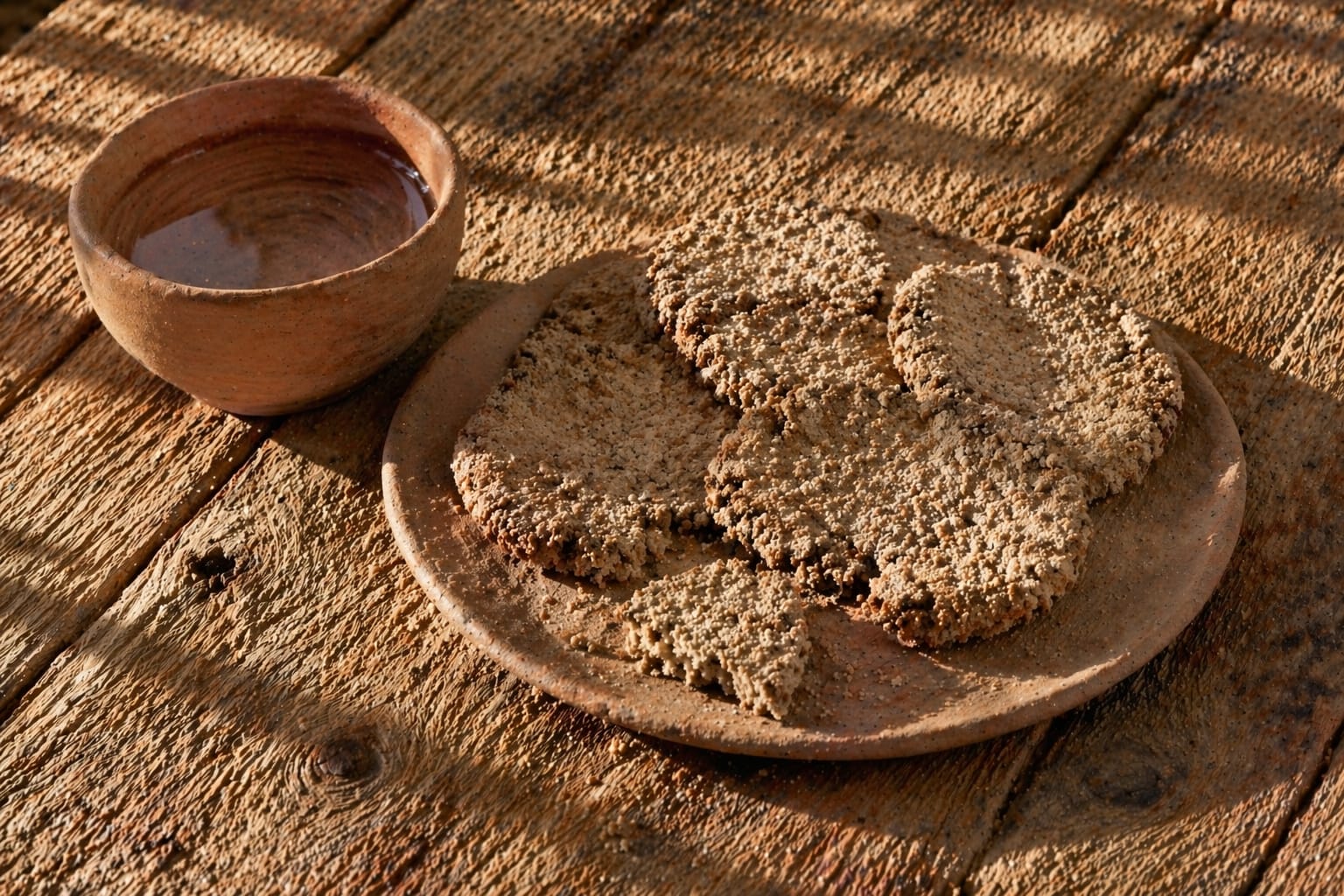
And so we hold self-sufficiency to be a great good, not for the purpose of always living with little, but so that we will be satisfied with little when we do not have much, and because we are fully convinced that those who need extravagance the least enjoy it the most and that every natural desire is easy to satisfy, while those that are empty and groundless are hard to fulfill. When they remove the pains of hunger and thirst, simple flavors bring us pleasure equal to that of an extravagant diet. Even barley cake and water produce the highest pleasure when they are eaten by someone in need. Accustom yourself, then, to a plain rather than an extravagant way of life: this is integral to health, makes a man resolute before the necessary duties of life, enables us to better enjoy occasional luxuries, and renders us fearless of misfortune.
When we say therefore that pleasure is the goal of life, we do not mean the pleasures of sensualists or those that depend on acts of enjoyment, as some maintain in ignorance, or because they disagree with us or willfully misrepresent our teaching. What we mean by pleasure is the absence of pain in the body and trouble in the mind. For not a long chain of parties and drunken nights, nor the enjoyment of boys and women, nor a table laden with fish and other extravagances, produces a pleasant life, but rather sober reasoning, which examines the roots of our every choice and avoidance, and drives out those opinions that so greatly disturb our lives.
Prudence is the foundation of all of this and our greatest good. Because of this, prudence is more valuable than philosophy, and all the other virtues are produced from it. Prudence teaches that it is not possible to live pleasurably without living prudently, honorably, and justly, nor to live prudently, honorably, and justly without living pleasurably. For the virtues are necessarily intertwined with the pleasurable life, and the pleasurable life is inseparable from them.
Commentary
Read the full translation series on the Letter to Menoeceus here.
Today we come to the fourth entry in our five-part series on the Letter to Menoeceus, our longest continuous summary of ethical teachings from Epicurus himself. Previous installments have covered the true nature of the gods, why death is not an evil, and the argument for hedonism. In today’s segment, Epicurus puts his general teaching on pain and pleasure into more practical terms.
And so we hold self-sufficiency to be a great good, not for the purpose of always living with little, but so that we will be satisfied with little when we do not have much, and because we are fully convinced that those who need extravagance the least enjoy it the most and that every natural desire is easy to satisfy, while those that are empty and groundless are hard to fulfill. When they remove the pains of hunger and thirst, simple flavors bring us pleasure equal to that of an extravagant diet. Even barley cake1 and water produce the highest pleasure when they are eaten by someone in need. Accustom yourself, then, to a plain rather than an extravagant way of life: this is integral to health, makes a man resolute before the necessary duties of life, enables us to better enjoy occasional luxuries, and renders us fearless of misfortune.
There is some dispute as to how plainly and ascetically the Epicureans actually recommended we live. On the one hand, they clearly did not mandate constant extreme deprivation: Epicurus here says that he does not recommend “always living with little” and that one of the benefits of his teachings is to increase one’s enjoyment of extravagant pleasures from time to time. A testimony from Seneca (Epistles 18.9) reinforces this point:
Epicurus, the teacher of pleasure himself, used to have certain days during which he would do the bare minimum to quiet his hunger, in order to see whether his subsequent state would in fact fall short of a full and complete pleasure, and, if so, by how much it would fall short and whether that shortfall was worth the great efforts people often make to avert it. This is surely what he is describing in his letter to Polyaenus written during the archonship of Charinus. In this spirit is his boast that he is able to supply his day’s food for less than a single copper coin, while Metrodorus, who had not progressed as far, required the full coin’s value.
A key phrase here is certos habebat dies: Epicurus had “certain days” on which he would practice extreme frugality—this was not his constant habit. Still, he clearly enjoined a simple lifestyle (ἁπλαῖς καὶ οὐ πολυτελέσι διαίταις) and recommended that extravagances only come at intervals (ἐκ διαλειμμάτων), rather than being routinely sought out. There are therefore two guardrails for the Epicurean position: live plainly and simply, with only occasional luxuries, but do not be excessively ascetic or stringently avoid pleasures that are easy to obtain. (How exactly this should translate to modern standards of living is open to debate, and probably to a significant variety of reasonable positions depending on one’s financial circumstances.)
When we say therefore that pleasure is the goal of life, we do not mean the pleasures of sensualists or those that depend on acts of enjoyment, as some maintain in ignorance, or because they disagree with us or willfully misrepresent our teaching. What we mean by pleasure is the absence of pain in the body and trouble in the mind. For not a long chain of parties and drunken nights, nor the enjoyment of boys and women, nor a table laden with fish and other extravagances, produces a pleasant life, but rather sober reasoning, which examines the roots of our every choice and avoidance, and drives out those opinions that so greatly disturb our lives.
In last week’s selection, Epicurus outlined his position that the elimination of pain constituted the height of pleasure. Here, he reiterates that point along with some corollaries that should be obvious, but which are often omitted from the critiques of hedonism given by both the generally uninformed and by philosophical opponents who may or may not be engaging in good faith debate. Since Epicurean pleasure is the absence of pain, we are not talking about drinking, feasting, and having sex with boys and female slaves (i.e. the milieu of Plato’s Symposium, not too far distant from Epicurus’ life—he was born about six years after the death of Plato).
Instead, the kind of pleasure Epicurus is talking about is enhanced primarily through reasoning and the removal of false opinions. The physical training he describes above (routinely living simply and experimenting periodically with stricter austerity) is a useful precursor to philosophy. It helps us to understand what is truly needed to satisfy our necessary desires. But while chasing sensual pleasures is clearly not the path to a pleasant life, neither is material austerity per se. Relative material austerity is just one tool towards the real goal: reducing mental disturbance.
Prudence is the foundation of all of this and our greatest good. Because of this, prudence is more valuable than philosophy, and all the other virtues are produced from it. Prudence teaches that it is not possible to live pleasurably without living prudently, honorably, and justly, nor to live prudently, honorably, and justly without living pleasurably. For the virtues are necessarily intertwined with the pleasurable life, and the pleasurable life is inseparable from them.
Here we come to a few of the most radical and distinctively Epicurean positions. First, that prudence is more valuable than philosophy—a very unusual thing for most philosophers to say! Prudence is a rendering of phronesis, which is also sometimes translated as “practical wisdom” in distinction from more theoretical or abstract forms of clear thinking. “Theoretical wisdom” does include valuable teachings, such as Epicurus’ own regarding the correct understanding of the gods and of death. But practical wisdom is concerned with the proper weighing out of the pleasure and pain attendant to any possible course of action. It is prudent to recognize that continuous attendance at drunken sex parties is not an effective way to achieve a pleasant life, because that lifestyle comes with significant downsides. If you don’t get that right, all the theoretical subtlety in the world will not bring you happiness.
The second essential teaching here is that Epicurus considers all the traditional, normie virtues (“By honor is meant the unwritten law that determines the conduct of a gentleman; and by justice is meant obedience to the written laws of the country”2) to inevitably go along with the pleasurable life. Critics will often oppose such values to hedonism (improperly understood). “Living a life of pleasure,” they will say, “is opposed to honor and justice. We need to teach people to forego their own pleasure in the interest of these virtues.”
Epicurus denies this. And what squares this circle, reconciling the life of pleasure and the life of virtue, is phronesis. This teaching is elaborated more elsewhere, but the point is that a rational consideration of our advantage and disadvantage will almost always lead us to behave as the just and honorable citizens would have us do. We will not steal, lie, and cheat, because that will not bring us more pleasure. What it will bring us is some superfluous sum of money or other such insubstantial “benefit,” while also earning us legal penalties, the fear of legal penalties, mistrust, the fear of mistrust, and reduced opportunities for trustworthy friendship. The only conflict between Epicureanism and common-sense morality here is this: Epicureans act justly and honorably because they recognize it is in their own best interest, rather than forcing themselves to do so while believing they are actually harming themselves.
Next week, we’ll conclude the Letter to Menoeceus with a consideration of fate and a wrapping-up of all we’ve covered, summarizing how one who internalizes all of these precepts can live “like a god among men.”
Read the full translation series on the Letter to Menoeceus here.
Original Text
καὶ τὴν αὐτάρκειαν δὲ ἀγαθὸν μέγα νομίζομεν, οὐχ ἵνα πάντως τοῖς ὀλίγοις χρώμεθα, ἀλλ’ ὅπως, ἐὰν μὴ ἔχωμεν τὰ πολλά, τοῖς ὀλίγοις χρώμεθα, πεπεισμένοι γνησίως ὅτι ἥδιστα πολυτελείας ἀπολαύουσιν οἱ ἥκιστα ταύτης δεόμενοι, καὶ ὅτι τὸ μὲν φυσικὸν πᾶν εὐπόριστόν ἐστι, τὸ δὲ κενὸν δυσπόριστον, οἵ τε λιτοὶ χυλοὶ ἴσην πολυτελεῖ διαίτῃ τὴν ἡδονὴν ἐπιφέρουσιν, ὅταν ἅπαν τὸ ἀλγοῦν κατ’ ἔνδειαν ἐξαιρεθῇ, [131] καὶ μᾶζα καὶ ὕδωρ τὴν ἀκροτάτην ἀποδίδωσιν ἡδονήν, ἐπειδὰν ἐνδέων τις αὐτὰ προσενέγκηται.
τὸ συνεθίζειν οὖν ἐν ταῖς ἁπλαῖς καὶ οὐ πολυτελέσι διαίταις καὶ ὑγιείας ἐστὶ συμπληρωτικὸν καὶ πρὸς τὰς ἀναγκαίας τοῦ βίου χρήσεις ἄοκνον ποιεῖ τὸν ἄνθρωπον καὶ τοῖς πολυτελέσιν ἐκ διαλειμμάτων προσερχομένους κρεῖττον ἡμᾶς διατίθησι καὶ πρὸς τὴν τύχην ἀφόβους παρασκευάζει.
ὅταν οὖν λέγωμεν ἡδονὴν τέλος ὑπάρχειν, οὐ τὰς τῶν ἀσώτων ἡδονὰς καὶ τὰς ἐν ἀπολαύσει κειμένας λέγομεν, ὥς τινες ἀγνοοῦντες καὶ οὐχ ὁμολογοῦντες ἤ κακῶς ἐκδεχόμενοι νομίζουσιν, ἀλλὰ τὸ μήτε ἀλγεῖν κατὰ σῶμα μήτε ταράττεσθαι κατὰ ψυχήν.
[132] οὐ γὰρ πότοι καὶ κῶμοι συνείροντες οὐδ’ ἀπολαύσεις παίδων καὶ γυναικῶν οὐδ’ ἰχθύων καὶ τῶν ἄλλων, ὅσα φέρει πολυτελὴς τράπεζα, τὸν ἡδὺν γεννᾷ βίον, ἀλλὰ νήφων λογισμὸς καὶ τὰς αἰτίας ἐξερευνῶν πάσης αἱρέσεως καὶ φυγῆς, καὶ τὰς δόξας ἐξελαύνων, ἐξ ὧν πλεῖστος τὰς ψυχὰς καταλαμβάνει θόρυβος.
τούτων δὲ πάντων ἀρχὴ καὶ τὸ μέγιστον ἀγαθὸν φρόνησις. διὸ καὶ φιλοσοφίας τιμιώτερον ὑπάρχει φρόνησις, ἐξ ἧς αἱ λοιπαὶ πᾶσαι πεφύκασιν ἀρεταί, διδάσκουσα ὡς οὐκ ἔστιν ἡδέως ζῆν ἄνευ τοῦ φρονίμως καὶ καλῶς καὶ δικαίως <οὐδὲ φρονίμως καὶ καλῶς καὶ δικαίως> ἄνευ τοῦ ἡδέως. συμπεφύκασι γὰρ αἱ ἀρεταὶ τῷ ζῆν ἡδέως, καὶ τὸ ζῆν ἡδέως τούτων ἐστὶν ἀχώριστον.
Norman Wentworth DeWitt, Epicurus and His Philosophy (Minneapolis: University of Minnesota Press, 1954), 246.
Metrodorus, the co-founder of the school, elaborates on the emergence of pleasures with the virtues in Vatican Sayings 27 and 41. This seems to be, in my view, a key feature of a salvific theory that offers salvation in this life and for this world. In this essay I focus on the word "ama" which is Greek for simultaneity, and refers to the co-emergence of the pleasures and their causes: https://hiramcrespo.substack.com/p/the-activities-of-vatican-saying-7f8