

The Epicurean advocacy for pleasure is criticized on all sides. For example:
High-minded types say that pleasure is a low and inadequate goal for human beings.
Self-denying types say that pleasure is an outright bad or misleading objective, and that stringent asceticism is the way to go. (Occasionally, some people focus exclusively on Epicureanism’s pain reduction techniques and praise of “static” pleasure and think that we are recommending avoidance of active pleasures.)
Conventional modern consumers say that pleasure is expensive. They like it, but think that tasting lots of pleasures requires lots of money: either you need to dedicate yourself to careerism, or you are justified in complaining that only rich people get access to the good life.
I reject all of these. I’ve previously explained the theory of what we mean by pleasure and why we think it is our most appropriate goal, but today I’d like to address such criticisms in a more practical way, because they can all be vividly refuted by the very real existence of Cheap Fun. The activities I’m about to share with you are not low, ignoble, and “piggish,” and may indeed involve high levels of aesthetic refinement and spiritual elevation. They are all actively “enjoyable,” as that word is conventionally understood, and do not derive their primary pleasantness from the avoidance of pain. And they are all cheaply and easily attainable.
These are examples of activities that practicing modern Epicureans enjoy with gusto. None of them individually constitutes the good, but we are happy to recognize them as good. In many respects, regular joyful participation in cheap fun may be a better yardstick of Epicurean alignment than abstract knowledge of the doctrines; I think there are probably many professors of philosophy who could smoothly recite the arguments of the ancient texts, but who often fail to appreciate the joys of everyday life. Today is your test: do you live like an Epicurean?
My aim today is to be very concrete and normal—I’m talking about fun and games, books and movies, projects and activities—but there are, of course, some deeper underlying threads that run through all of these surface amusements. The first is the idea of leisure: most of these activities cost very little in terms of money, but every activity requires some amount of time. If you currently have a demanding job, you can certainly still enjoy many of these in what leisure you have, but I would keep in mind that a potentially bigger pay-off of frugality is getting to work less, retire earlier, or choose an occupation that is more agreeable to you even if less lucrative. These specific kinds of fun activities are not the goal of the philosophic life; they are a tool to help enable it, while enjoying yourself along the way. If work is too demanding, don’t get stuck on thoughts of “but I don’t have time for this frivolous stuff!” Instead, consider whether you can replace any high-cost leisure activities with these cheap ones so that you can engineer a more leisurely lifestyle for your future.
The second underlying current is the idea of philia, friendship or reciprocal affection (i.e. including partners and family members). A great many activities are more enjoyable with a companion. Maybe if you opted for the most expensive rather than the cheapest versions of the below, you could boost the momentary pleasure by 10% or so (while incurring substantially greater long-term costs). But if you can do the cheap versions with an agreeable companion, then you boost the enjoyment by far, far more. Such companionship is the cheapest way of making life more pleasant.
That’s it for theory! Here are ten widely accessible sources of pleasure. I do all ten, so in this department I am a 100% A+ Epicurean. What’s your grade?
1. Books
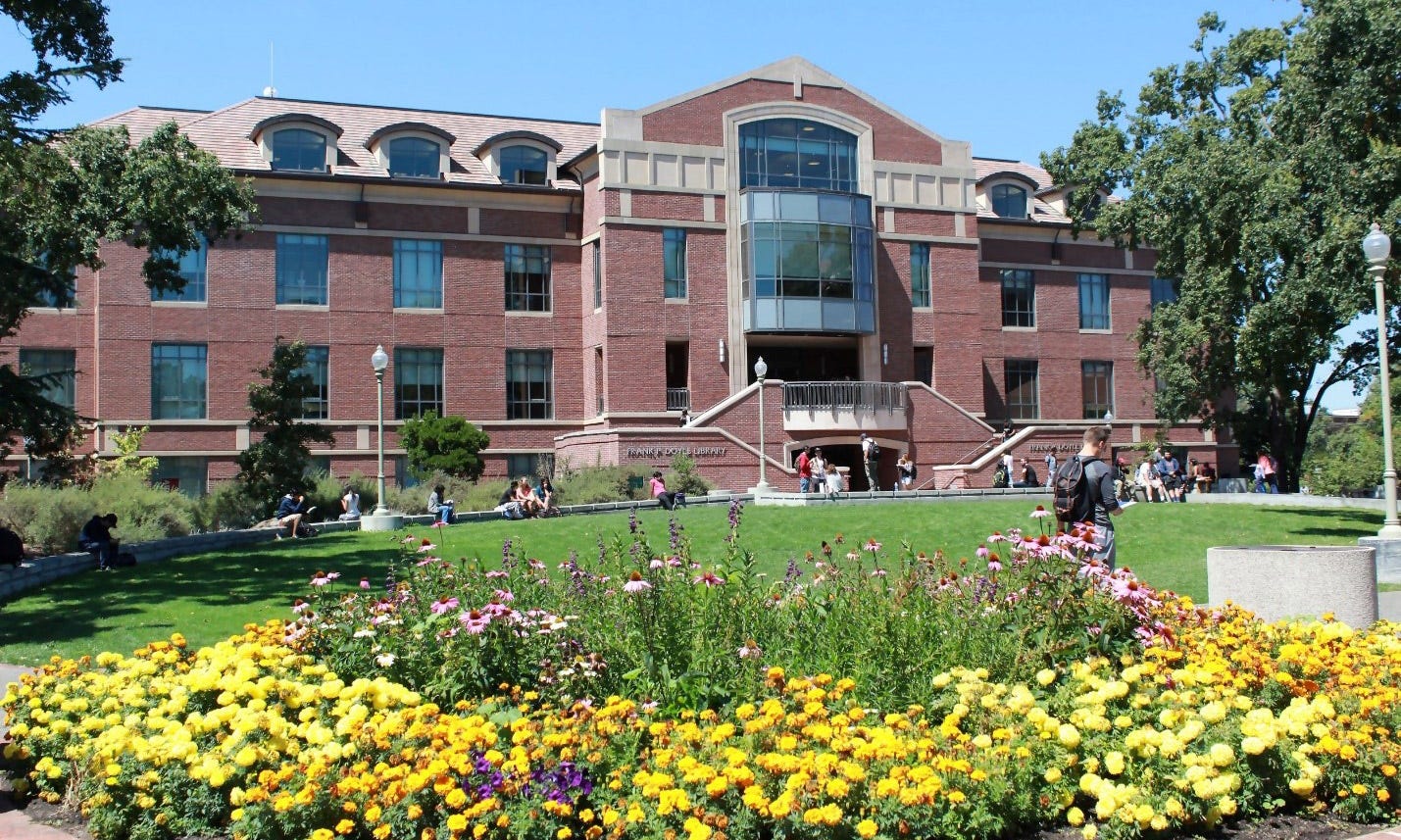
Since you’re reading philosophy Substack, there’s a good chance you like to read, so let’s start here: in large parts of the world, most books are basically free. There are two main routes to free books. The first is the public library, which is one of the greatest inventions of modern civilization. Not only do most towns have a library, many of them let you request books from other nearby libraries. Many of them also let you request books from far-away or more specialized libraries too—have you ever used your local library’s “interlibrary loan” service? You should! Most let you suggest purchases to add to their collections. Have you ever done that? You should! For extra benefits, check the rules at your nearest couple of libraries: maybe the next town over is in a different system and gives you access to more titles if you get a card there, or maybe there is a local college that gives access to community residents.
The second key to free or nearly-free reading is that a lot of the best books are old and therefore out of copyright. Old philosophy, for instance. Or the greatest poetry, essays, and novels in the history of literature—Epicurean ally Jane Austen, for one example. You can read these completely free online, in $1 e-book editions if you prefer an e-reader (a reasonable investment), or for a dollar or two in old copies from your local thrift store.
2. Movies
On the subject of consumable cultural products, I like movies too. Overall, movies are of higher quality than TV shows and inestimably higher value than short-form streaming video, so it is more pleasurable to watch real films rather than online junk. As with books, favoring old things is a good way to raise your quality levels, since a strategy of “pick the best old things” will yield on average better results than a strategy of “watch whatever is new.” Sometimes, old movies can be found for free on YouTube or other commercial streaming platforms (with ads), but your best tool again is the library: DVDs are still a thing! Many libraries also give access to ad-free streaming platforms like Hoopla or the very excellent Kanopy, which is like a better Netflix full of high-quality classic, foreign, and independent films.
I admit that I do enjoy going to the movie theater sometimes. Most American theaters have a “discount day” once a week. In my town, tickets are $6.50 on Tuesdays at one theater, and on Wednesdays at the other. $13 is a pretty cheap date. (Skip the popcorn; enjoy a nice dinner at home.)
3. Nature
As Landor said, “Nature I loved, and, next to Nature, Art”—books and movies are fine things, but nature offers truly inexhaustible depth and variety, without the intrusion of short-sighted humans with wrongheaded ideas. Access to nature varies in different places in the world, but if you have any local woods and forests, lakes and rivers, ponds and creeks, mountains and hills, marshes or coastlines, meadows and fields, parks and gardens—enjoy them! Many towns have free parks. Here in California, the library once again steps up by offering free State Park passes for access to hundreds of miles of wilderness trails.
So go for a hike, run, bike ride, or leisurely stroll. Look at flowers, trees, birds, bugs, rocks, and stars. Learn how to recognize things. Understand where and when you’ll find them. Learn how the plants and animals live and interact. Natural history is an inexhaustible pursuit.
4. Fun and Games
My family has a couple of old-fashioned board games: a chess set and a Scrabble board made decades ago and inherited from relatives have given us many hours of innocent and costless amusement.
We also have two balls, one soccer ball and one basketball. We don’t play basketball as often, which is why my ball is still in good shape—I believe I found it abandoned on the side of the street around the year 2000. You have my permission to pick one up at a garage sale for $5 though.
5. Bikes
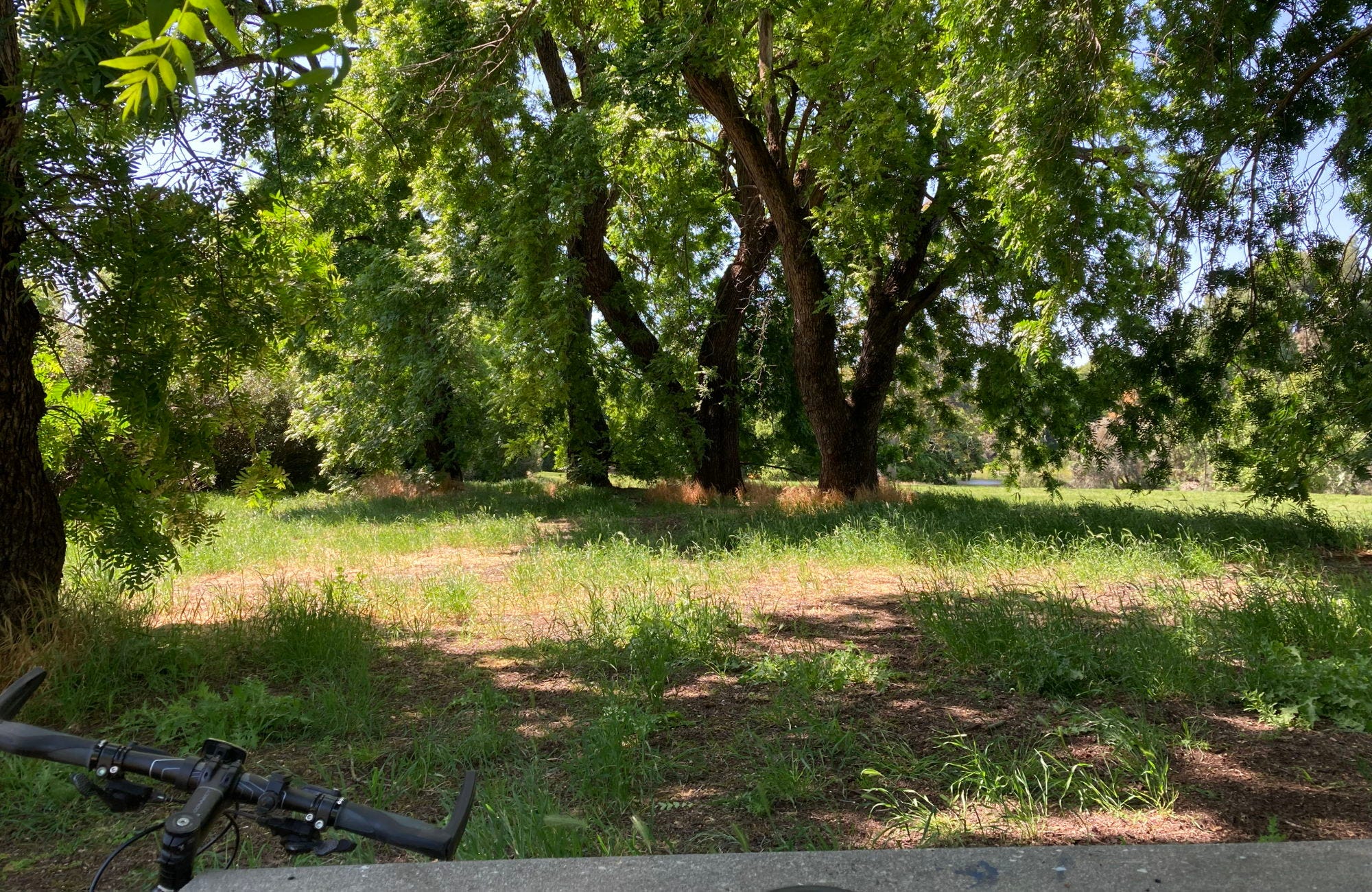
Speaking of nature and sports equipment, a bike is perhaps one of the most valuable items one can own. As Epicurean ally Mr. Money Mustache often evangelizes, bikes can easily save you money, improve your health, and bring you joy when you use them to replace local car trips. If there are a lot of cars in your neighborhood and biking is not optimally pleasant right outside your door, you should probably do it anyways—a lot of the hesitation is often a matter of habituation. The first time you drove a car in traffic was a little nerve-racking too! You get used to it. In the long-run, prioritizing bikeability when choosing your home location can have a very big hedonic payoff. It is really nice to not have to drive every day.
6. Exercise and Fitness
Speaking of nature, sports equipment, and bikes—let’s talk about exercise. Some people spend rather incredible amounts of money on fitness classes, gym memberships, or complicated equipment for their athletic hobbies. This isn’t necessary. The things I mentioned already are basically free—walk or run outside, get a ball and mess around with friends and family, ride a bike.
Personally, I find getting stronger to be an enjoyable and inexpensive hobby. (It also reduces the long-term pains of ill-health and limited physical function.) Calisthenics—push-ups, pull-ups, and other bodyweight exercises—are basically free. A few simple weights (dumbbells or kettlebells, for instance) can also be a sound investment, as they never break or become obsolete. If you get them used on Craigslist or something, and then outgrow them one day, you can accordingly usually resell them for around the same price you acquired them for.
7. Travel Less Far and More Cheaply
Many people spend large amounts of money on travel. The best way to reduce this, of course, is to travel less. Or at least to travel much less far—have you really comprehensively explored your own neck of the woods? Thoreau used to jokingly but seriously note that he had travelled a good deal in Concord. And he was going mostly by foot:
My vicinity affords many good walks; and though for so many years I have walked almost every day, and sometimes for several days together, I have not yet exhausted them. An absolutely new prospect is a great happiness, and I can still get this any afternoon. Two or three hours’ walking will carry me to as strange a country as I expect ever to see. (“Walking”)
If you have not yet walked every trail within an hour’s drive of your home (ideally in every season), then I would start there.
Of course, if you must travel more distantly, there are cheaper ways and more expensive ways of doing things. The tactics associated with cheap travel are legion. One simple tactic, for example: don’t pay cash for plane tickets. Credit cards—including ones with no annual fee—are always offering sign-up bonuses that can be converted to airline miles. If you’re going to fly anyways, these bonuses can accrue at a rate of around 15% of your spending (i.e. spend $3000 and get points worth around $450 in plane tickets). We fly occasionally, mostly when visiting family, but we try not to do so at a faster rate than we can earn the free miles with our usual spending and a periodic new card. (Of course, this technique is counterproductive if you spend extra to earn the bonuses, take extra trips you wouldn’t have taken, or pay interest on your purchases, but if you are a prudent Epicurean, you will not fall for such traps.)
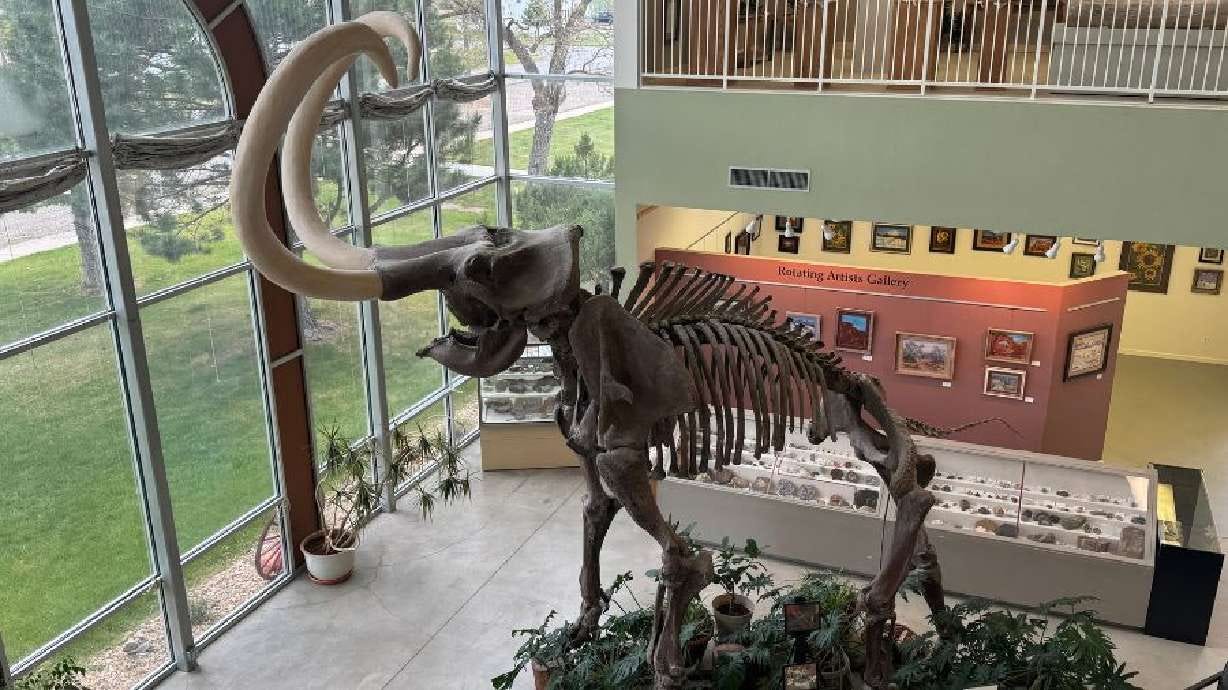
Think creatively when you travel. If you can, stay with family. If you can, stay somewhere with a kitchen, so you can cook your own food. Go camping. Consider less expensive places rather than the typical tourist traps. My wife and I visited rural Utah this year and had a pretty jolly time. A meal for two at the nicest restaurant in town came to about $35, while mostly we stocked up at the region’s Walmart Supercenter like real Americans. I tromped around and saw lots of trees and birds and animals that I hadn’t seen before. My wife drew a lot. I saw this cool wooly mammoth skeleton at a free museum. Stuff like that.
8. Cooking and Other Domestic Insourcing
Admittedly, travel still tends to cost something. Other enjoyable activities may have a negative cost—they can save you money. The most obvious cases are those of “domestic insourcing,” where you take on tasks that the less frugal pay others to do for them. Many people enjoy working in their gardens, fixing things around the home, or taking care of their own bikes and cars, for instance. You get to learn, feel competent, and do things just the way you want them—why pay someone else to deprive you of those satisfactions?
One prominent example of this is cooking. Some people frequently eat in restaurants or get take-out. This is expensive. For many people, cooking itself is enjoyable. Many people also get pleasure from presenting their friends and family with something they made themselves. Most people enjoy eating a home-cooked meal more than a restaurant meal of equivalent cost (i.e. the most basic kitchen skills will give you something better than a fast-food meal, while real high-level culinary skill can get very pricey).
Division of labor with family members can help you find the most pleasure-enhancing arrangement. My wife likes cooking more than me, while I derive greater intrinsic satisfaction from a tidy home, so she does most of the cooking, while I do most of the dishwashing and other cleaning.
9. Learning
Gaining knowledge is pleasurable. I’ve already alluded to a few ways of doing this. Read a book from the library. Consult the internet, YouTube, or a chatbot and learn how to cook something, fix something, or perform some other household task. This is satisfying.
More structured learning from qualified experts is not in itself expensive, although the high prices of full academic credentials can be. As a philosophy Substack reader, you may be drawn to more bookish fields of knowledge. Here are two tips. First, use community colleges. In California, $138 gets you access to a full semester of an expert teacher, curriculum and equipment, and a community of learners. In my state, we have a website (cvc.edu), where you can search every online class offered at every community college in the whole state, if your local college doesn’t offer what you would like to learn. I think that’s a pretty great value, and so I’ve taken classes on everything from botany and accounting to Italian and art history.
Second, if you have a full four-year college or university nearby, see if you can informally audit classes for free. This strategy can be particularly valuable for those interested in the classics, since these departments are generally shrinking and often have extra capacity. That’s how I learned Greek: I was living in a college town, I sent emails to some professors, and they all said “please join us.” I took six full classes while I lived there, going through their whole introductory Greek sequence and multiple upper-division Greek and Latin classes, with a price tag of $0.
10. Creation
The implication of “pleasure is for pigs” critiques is that pleasure is inherently crude and unrefined. I don’t think this is particularly true of the examples above—reading classic novels and learning ancient Greek are not too popular among pigs—but nowhere is it more false than when it comes to active creative endeavors. Play or write music. Draw or paint. Write.
These pleasures take some work, but they offer lots of challenge and progressive skill development—that kind of difficulty enhances, rather than offsets pleasure. In many cases, such hobbies are basically free: pen and paper, or access to a basic word processor, are not hard to obtain. Not uncommonly, they are income-positive. Maybe only in a small way: perhaps you can make some little crafty items rather than buying all of your Christmas and birthday gifts. Maybe in a slightly bigger way: sell your art online or in a local gallery, write for your local paper or on Substack, teach your skills to others. Writing my bird books didn’t make me rich, but the process brought me more satisfying hours than any act of passive consumption. That is pleasure too.
When it comes to the conventional pleasures and pastimes of modern society, this is roughly what my life looks like. I have both deeper interests and more casual hobbies. I engage in several of these activities each day, in greater or lesser degrees (reading, writing, and dishwashing are pretty constant). This is not a particularly expensive life, nor a piggish one, nor an empty one. It is a life full of many pleasures, because the good is easy to obtain.